Cogeneration
Our combined heat and power plants fuelled by locally sourced biomass achieve an efficiency of close to 100%. The plants are connected to the district heating network, where waste heat generated during electricity production is utilised for space heating and domestic hot water. This is the most efficient way to produce heat and electricity, as it ensures maximum use of primary energy and significantly reduces emissions.

Industrial Heat Pumps
Thermal energy is all around us – in the air, the ground, ventilation air, groundwater, seawater and wastewater. Heat pumps make use of the thermal energy stored in the surrounding environment and, with the help of electricity, raise it to a temperature suitable for our needs.
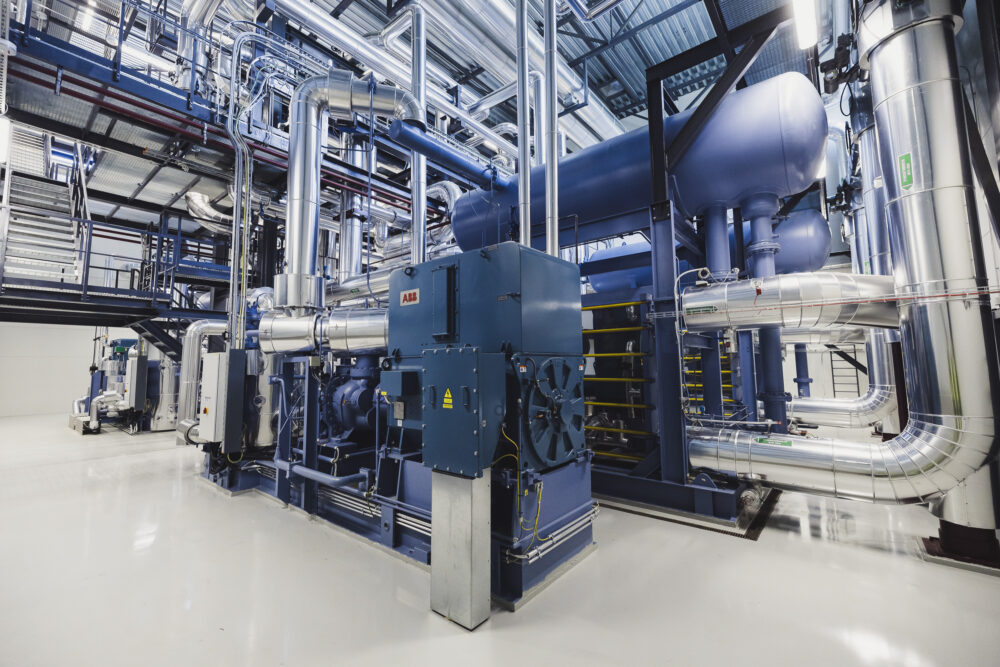
Our Paljassaare wastewater and seawater heat pump plant is capable of covering nearly one fifth of the demand of Tallinn’s district heating network. The warm water reaching the sewer system from bathrooms and kitchens contains a significant amount of thermal energy, which we utilise in the district heating system using heat pumps. As the amount of wastewater varies throughout the day, seawater is added to the treated wastewater when needed to ensure stable operation of the plant.
Paljassaare wastewater and seawater heat pump plant
Heat Pumps to Increase Efficiency
We also use heat pumps to improve the efficiency of our production units. Flue gas condensers and heat pumps have been added to our cogeneration plants to recover waste heat generated in the process. In Jõgeva, we use an air-to-water heat pump during periods of low heat demand, when operating a wood chip boiler would be inefficient.