

Recommendations in the event of a power outage
As a provider of essential services, we ensure heat supply to our customers’ buildings even during a power outage. However, heat circulation inside the building continues only if a functioning backup power supply is available. Read more about how to act in the event of a power outage and how to ensure backup power readiness for your building’s heating substation.
During a power outage, the building’s heating system will operate only if the heating substation is equipped with a backup power connection and a backup power unit.
During a power outage
If the building’s heating substation loses power, then
The water in the pipes will begin to cool
The indoor temperature will start to drop
Depending on the outdoor temperature, the building’s structure, and its condition, prolonged outages may pose a risk of pipes freezing.
How to ensure backup power readiness for the building’s heating substation?
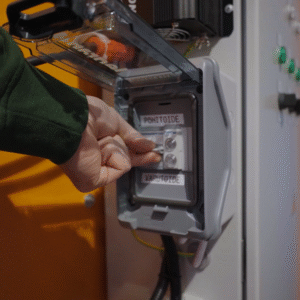
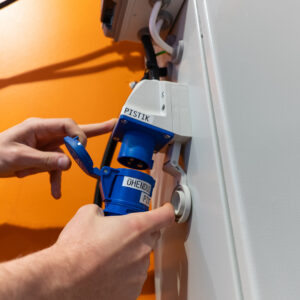
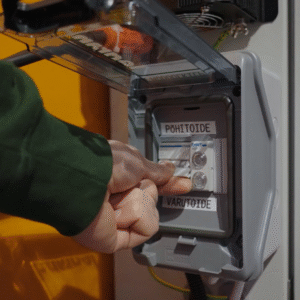
The simplest and most cost-effective solution is to equip the heating substation with backup power readiness, allowing it to be connected to a backup power unit – such as an inverter generator – during a power outage. To connect any backup power device to the heating substation, a transfer switch and a power socket are required. For all electrical work, please contact a qualified electrician who can assess the scope of the work and, if needed, advise on choosing a suitable backup power unit for the heating substation.
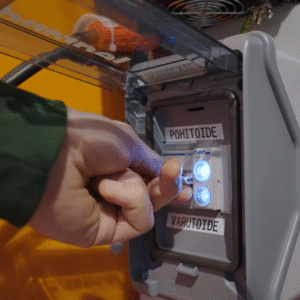
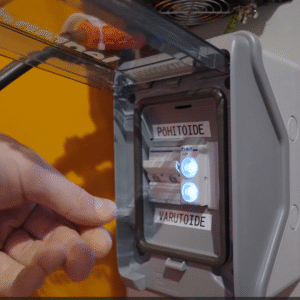
Transfer switch
This device allows the heating substation’s power supply to be switched to backup power when electricity is unavailable, and back to the main grid once the electrical connection has been restored.
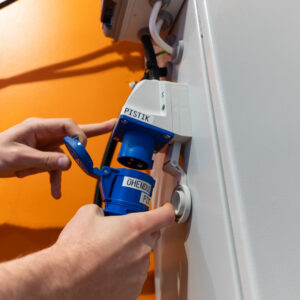
Power socket
This enables the backup power unit to be connected to the heating substation.
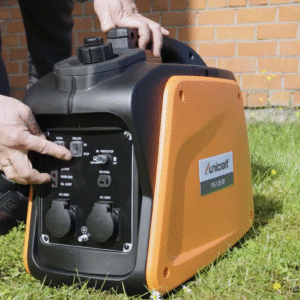
There are several types of backup power units
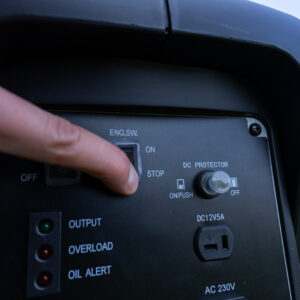
The most common type of backup power unit is an inverter generator: the generator produces direct current, which the inverter converts into stable, high-quality alternating current. This makes it the most suitable option for a heating substation, as the substation requires stable electricity for proper operation and equipment reliability.
When choosing an inverter generator, its capacity should be based on the electrical load of the heating substation. For example, the average electrical consumption of the heating substation in a five-storey building with four stairwells is around 0.7 kW, meaning a generator with at least 1 kW of output is suitable. Since the inverter generator is used solely to keep the heating substation running, the required temporary backup power capacity is lower than what would be needed for a device like a hair dryer or an electric kettle.
The cost of a backup inverter generator is typically a few hundred euros
A car battery can also be used as a backup power source with the help of a sine wave inverter and terminals. In the event of a power outage, it is possible to use the 12 V battery of a running car together with a sine wave inverter, which converts it into 230 V alternating current. This solution can also supply the heating substation with electricity. In addition, there are other types of backup power units – such as power banks, solar-based systems with batteries and inverters, and hydrogen generators – but these are less common solutions.
Backup Power Readiness with the Support of the City of Tallinn

The City of Tallinn supports the creation of backup power readiness for apartment associations in cooperation with the Municipal Police Department, which is responsible for crisis management and civil protection in Tallinn. Within the framework of this support measure, backup power readiness will be installed at the heating substations of apartment buildings.
For this purpose, the electrical works will be carried out by Bergland OÜ, an electrical contractor selected by the City of Tallinn through a public procurement process. The apartment association is required to provide access to the heating substation at the agreed time and ensure the presence of an authorised representative upon completion of the works to review the completed work and sign the handover–acceptance report.
To agree on the timing of the works, a representative of Bergland OÜ will contact the apartment association during 2026.
All costs related to the electrical works are covered by the Tallinn Municipal Police Department. The apartment association is only responsible for the cost of the backup power unit itself — without it, heat supply in the building will not be maintained in the event of a power outage.
For technical questions related to the electrical works, please contact:
Cristian Kuldkepp
Bergland OÜ
cristiankuldkepp@gmail.com
The topic is coordinated on behalf of the Municipal Police Department by:
Kent-Kaarel Vene
Senior Specialist, Civil Protection Department
munitsipaalpolitsei.kyte@tallinnlv.ee


